
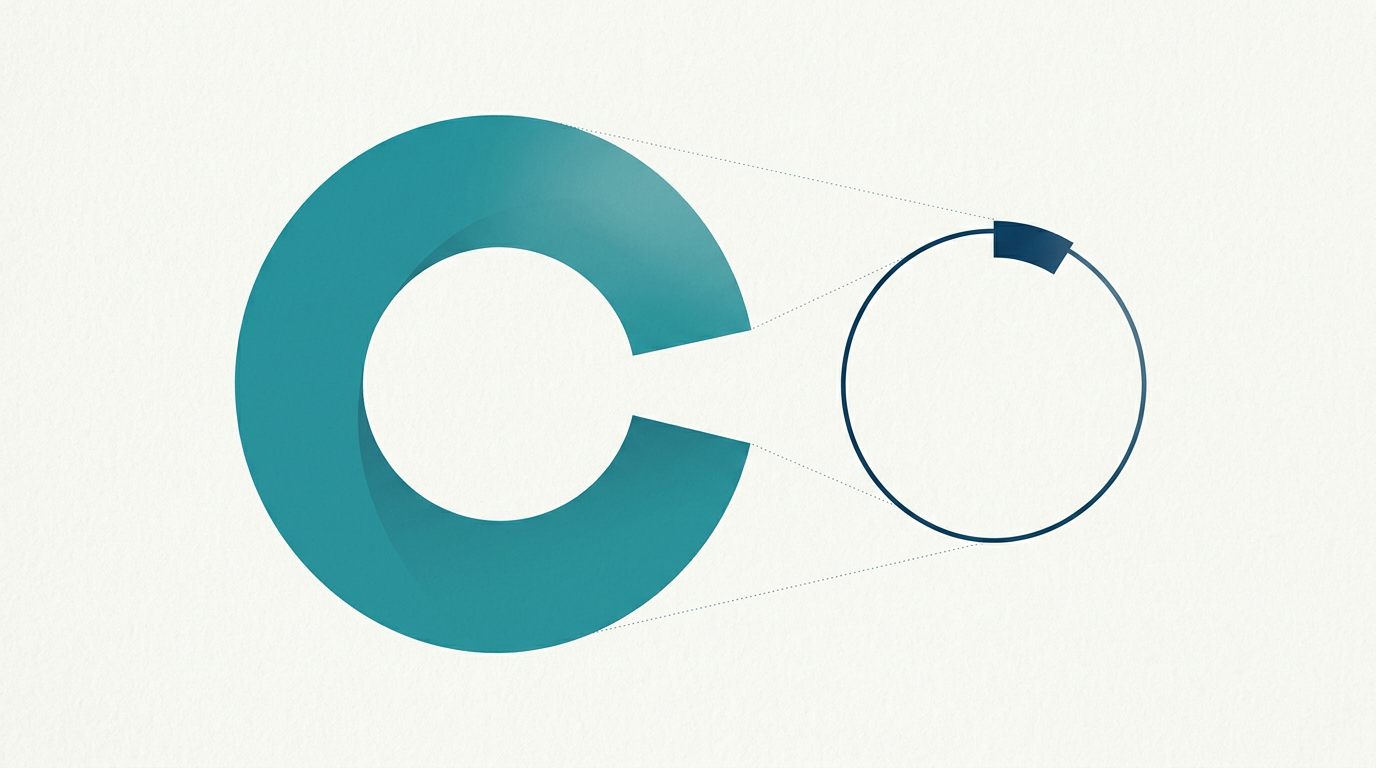
Every year the Office of the National Coordinator for Health IT publishes survey data on how Americans access their health information. Buried in the 2024 release is a pair of numbers that, read together, explain a decade of frustration in ambulatory care.
59% of US adults have multiple online medical records or patient portals. And only 7% used an app to combine them.
Read each number alone and it's unremarkable. Read them together and you have the precise shape of the interoperability problem — not as a standards failure, but as a usability one.
What the first number tells us
Fifty-nine percent is a story of success, technically. Two decades of HITECH incentives, meaningful-use requirements, and patient-access rules worked. Most Americans now have digital access to their records. For patients with any real clinical complexity — multiple specialists, a hospitalization, a chronic condition — that number climbs higher, because each new care setting tends to spin up its own portal.
So the median complex-care patient isn't suffering from a lack of records. They're suffering from an abundance of them, scattered across systems that don't talk to each other in any way the patient can act on.
The problem was never that records don't exist. It's that the typical complex-care patient has too many records, in too many places, with no single readable view.
What the second number tells us
Seven percent is the more interesting figure. Apps that combine records exist. Apple Health Records exists. PicnicHealth exists. A dozen aggregators exist. And yet 93% of people who have multiple portals don't use any of them to bring the records together.
Why? Because the existing tools largely solve aggregation — pulling the data into one place — without solving comprehension. A patient who connects four portals into one app now has four portals' worth of dense clinical documents in one app. That's a filing improvement, not an understanding improvement. The cognitive load is the same.
The 7% number is what happens when a category solves the easy half of a problem and calls it done. Aggregation without clarity doesn't change behavior, because it doesn't change the patient's actual experience of trying to understand their own care.
Why this matters at the point of care
Flip the 59/7 gap around to the clinician's side of the desk and it gets worse. When a complex-care patient walks into an ambulatory visit, the clinician inherits the same fragmentation the patient lives with — except they have fifteen minutes to resolve it.
Access to records is not the same as understanding them. The industry solved access. It has barely started on understanding.
This is the gap MediClarity is built for. Not another aggregator that improves the filing. A clarity layer that turns the records a patient already has into a structured, plain-language summary — for the patient to understand, and for the clinician to read in the time a real visit allows.
The number we'd like to move
The honest goal isn't to push the 7% to 100% by making more people connect more portals. It's to make the connecting worth it — so that combining your records produces something genuinely more useful than the sum of the parts. A health story instead of a bigger pile.
That's a higher bar than aggregation, and it's the one we hold ourselves to. If you want to see what crossing it looks like — for a patient, a caregiver, or a clinical panel — the demo is the fastest way.
Source: Office of the National Coordinator for Health IT (ONC), 2024 data on individuals' access to and use of online medical records. Figures cited reflect that release.